
Manufacturing Processes in Vietnam: A Practical Guide for Buyers
A practical guide to manufacturing processes in Vietnam, from plastics and metals to wood, textiles, ceramics and natural materials, and how to evaluate factory capabilities.
Manufacturing in Vietnam Is About More Than Finding a Factory
When people talk about sourcing from Vietnam, the conversation usually starts with the factory. That makes sense, but it is only part of the picture.
Before you start contacting manufacturers, you need to understand how the product is actually going to be made. The production process affects the factory you need, the materials you can use, tooling costs, minimum order quantities (MOQs), lead times, finishing options and, ultimately, the price you pay.
Vietnam has a surprisingly broad manufacturing base. Alongside the well-known furniture, textiles and handicraft sectors, there are factories working with plastics, metals, rubber, wood, ceramics, electronics, packaging and a wide range of industrial components.
This guide gives you an overview of the main production processes you are likely to come across when sourcing from Vietnam. It is not intended to replace a proper technical assessment. The aim is to help you understand the options and ask better questions before approaching factories.
Why the Production Process Matters
Two factories may both tell you they can make your product, but that does not necessarily mean they are the right factories.
A trading company may be able to arrange almost anything. A genuine manufacturer will normally have specific machinery, production lines, tooling and skilled workers suited to particular processes.
For buyers, understanding the process gives you a much better starting point. You can identify the right type of manufacturer, understand the major cost drivers and spot obvious red flags when a supplier starts giving you answers that do not make sense.
1. Plastic Manufacturing Processes
Plastics are used across consumer products, packaging, automotive components, electrical products, furniture parts and countless other applications.
Injection Moulding
Injection moulding is one of the most common processes for producing repeat plastic parts in volume. Plastic pellets are heated and injected into a mould under pressure, where the material cools and takes the shape of the cavity.
It is ideal for products with consistent dimensions and relatively high production volumes. The big issue for new buyers is tooling: the mould can represent a significant upfront investment, particularly for complicated parts or products requiring multiple components.
Things to consider before choosing injection moulding:
- What plastic polymer is required (e.g. PP, ABS, PC, Nylon)?
- How large is the part, and what tolerances are needed?
- How many cavities should the mould have?
- What quantity do you expect to order?
- Who owns and retains the physical tooling?
Other Plastic Processes
Depending on the product, you may also come across:
- Extrusion: for continuous profiles, tubing, and trims.
- Blow moulding: for hollow containers and bottles.
- Thermoforming: for trays, blisters, and thin packaging.
- Rotational moulding: for large hollow items like tanks and bins.
- Compression moulding: common for silicone and rubber parts.
The correct process depends on the shape, material, wall thickness, quantity and required mechanical performance of the finished product.
2. Metal Manufacturing Processes
Vietnam has a rapidly growing metalworking sector covering everything from simple fabricated components to precision-engineered parts.
CNC Machining
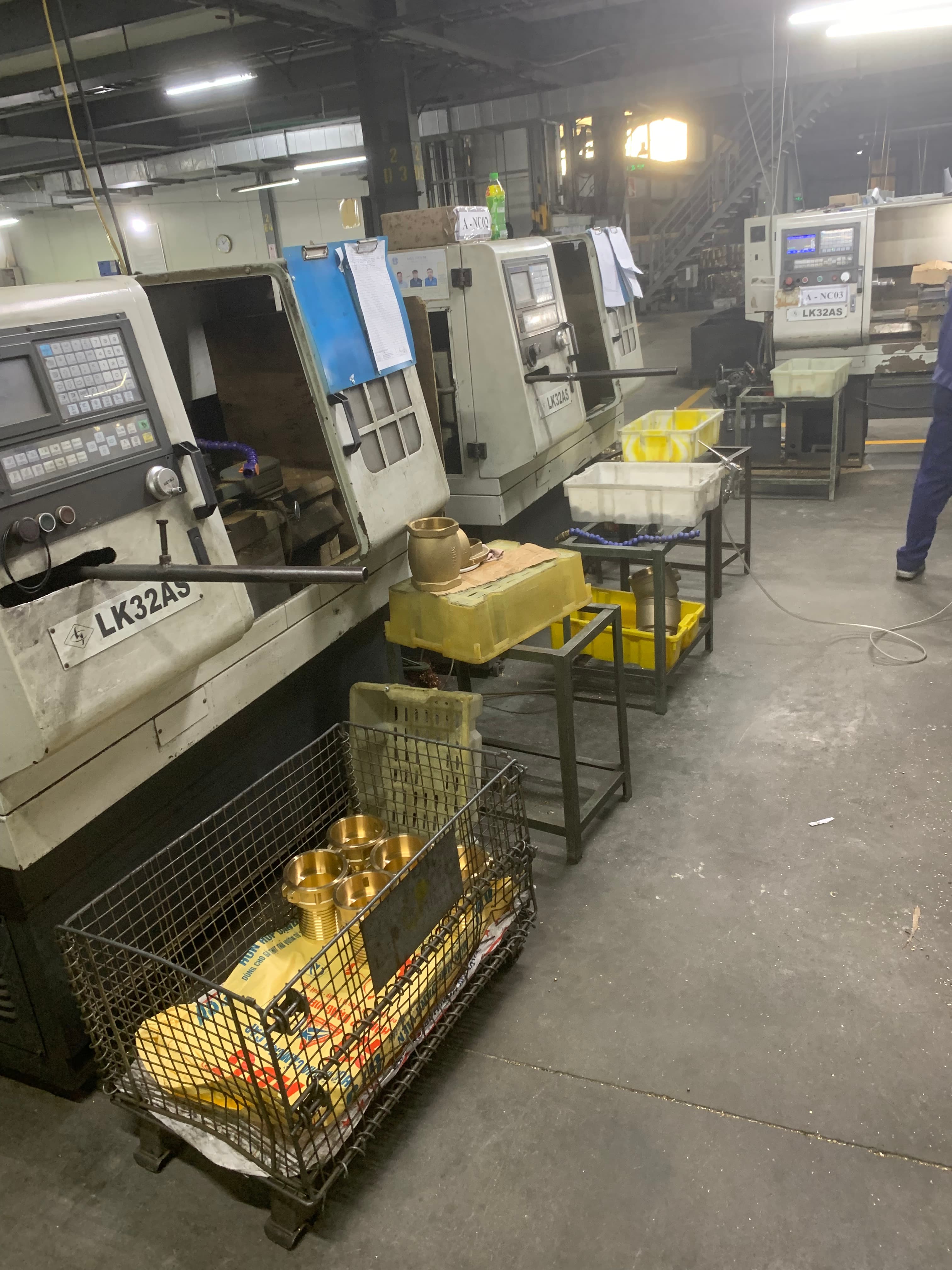
CNC machines remove material from a block, bar or billet using computer-controlled cutting tools. They are widely used for aluminium, steel, stainless steel, brass and engineering plastics.
CNC machining is excellent for high-precision components and prototypes, but it can become expensive if a design requires substantial material removal or extremely tight tolerances.
Sheet Metal Fabrication
Sheet metal products typically involve laser cutting, punching, bending, stamping and welding. This process is common for brackets, enclosures, frames, furniture components and industrial housings.
Casting, Forging and Extrusion
- Casting: Molten metal is poured into a mould to create complex shapes (die casting, sand casting, or investment casting).
- Forging: Uses high compressive force to shape metal, chosen where high mechanical strength and fatigue resistance are critical.
- Extrusion: Pushes heated metal through a shaped die to produce continuous profiles. (Read our deep-dive guide: Aluminium Extrusion in Vietnam: From Billets to Finished Products).
These processes may look similar from the outside, but they involve very different tooling costs, minimum volumes and lead times.
3. Wood Manufacturing Processes
Wood manufacturing in Vietnam ranges from highly automated furniture production lines to traditional craft workshops. That makes the country particularly competitive for indoor and outdoor furniture, homeware and decorative products.
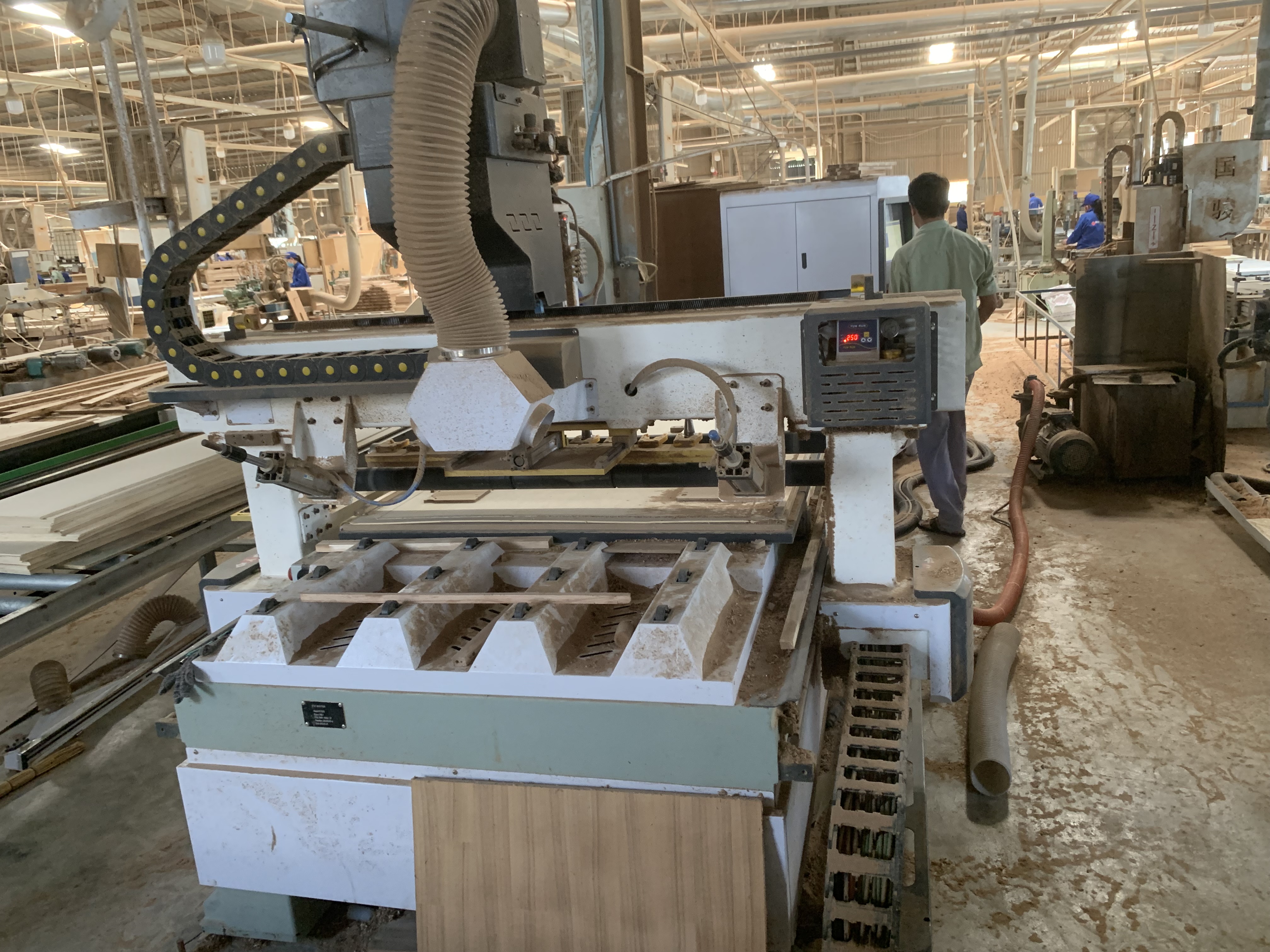
Common processes include CNC routing, sawing, turning, carving, drilling, sanding, laminating, finger-jointing and multi-stage finishing systems.
For wood products, the mechanical production process is only part of the story. The timber species, kiln-drying moisture content, construction joinery and finishing system (lacquer, oil, stain) all have a major effect on the final product's durability and export compliance.
4. Textile and Garment Manufacturing
Textile production is a massive industry in Vietnam. Depending on your product category, the process can include spinning, knitting or weaving, dyeing, printing, cutting, sewing, embroidery and post-assembly finishing.
For a garment or soft-goods buyer, finding a factory that can sew is not enough. You must confirm whether they have experience with your specific fabric weight, stretch characteristics, seam construction and finishing requirements.
A clear tech pack, approved fabric swatches, dimensional tolerance sheets and a disciplined sample-approval process will prevent costly production errors.
5. Ceramic Manufacturing
Vietnamese ceramics can be manufactured using several different methods depending on shape, complexity and order volume. Common processes include:
- Slip casting: for hollow, sculptural, or delicate decorative shapes.
- Pressing & Jiggering: for plates, bowls, and symmetrical tableware.
- Hand forming and wheel throwing: for artisanal, small-batch homewares.
After forming, ceramics undergo drying, bisque firing, glazing and final high-temperature firing. Because ceramic production involves natural shrinkage, glaze colour variation and breakage risks during kiln runs, strict golden samples and pre-production standards are vital before placing large orders.
6. Natural Materials and Traditional Production
This is one of Vietnam's most distinct sourcing advantages. Bamboo, rattan, seagrass, water hyacinth and other fast-renewing natural fibres are crafted by skilled artisan communities across the country.
The production process typically involves:
- Harvesting and material preparation (splitting, soaking, boiling).
- Weaving or framework shaping over metal/wooden moulds.
- Kiln drying and anti-mould treatment.
- Final sanding, trimming and protective topcoat application.
While more labour intensive than automated factory production, this combination of handcraft heritage, local renewable materials and competitive labour provides unique value for international homewares and décor brands.
7. Finishing and Secondary Processes
The primary forming process is only part of production. Secondary finishing makes a dramatic difference to the final appearance, durability and landed cost of your product.
Depending on the material, finishing can include:
- Metals: Powder coating, liquid painting, electroplating, anodising, electropolishing, heat treatment.
- Wood: Sanding, staining, PU coating, nitrocellulose lacquering, oiling.
- Textiles & Plastics: Screen printing, pad printing, heat transfer, laser engraving, ultrasonic welding.
The Outsourcing Reality
A factory may fabricate the main component in-house but subcontract coating, plating, or packaging to an external specialist.
Subcontracting is normal in modern manufacturing supply chains, but buyers need visibility. Knowing who does what, where the secondary processing occurs, and how quality control is enforced at every handover is critical.
How Do You Choose the Right Manufacturing Process?
There is rarely a single default answer based solely on product category. The best production process depends on a balance of technical and commercial factors:
- Material: Plastic, metal, wood, textile, ceramic, composite, or natural fiber.
- Product design: Geometry, wall thickness, tight tolerances, draft angles, and assembly requirements.
- Production volume: Rapid prototype, small pilot batch, or high-volume repeat runs.
- Tooling budget: Can the project absorb upfront tooling investments (e.g. injection moulds, stamping dies) for lower unit costs later?
- Required finish: Aesthetic expectations, surface texture, weather/UV exposure, food-contact safety.
- Performance specifications: Tensile strength, impact resistance, thermal tolerance, and durability.
- Target landed cost: The lowest manufacturing unit price does not always equal the lowest overall cost once tooling amortisation, scrap rates and freight are factored in.
A Common Mistake: Choosing the Factory Before the Process
One frequent mistake buyers make is finding a supplier that produces something vaguely similar and asking them to make their product.
While factories will often say "yes," this frequently leads to compromised designs, unnecessary tooling expenses, or forcing a product into a manufacturing method that was never optimal.
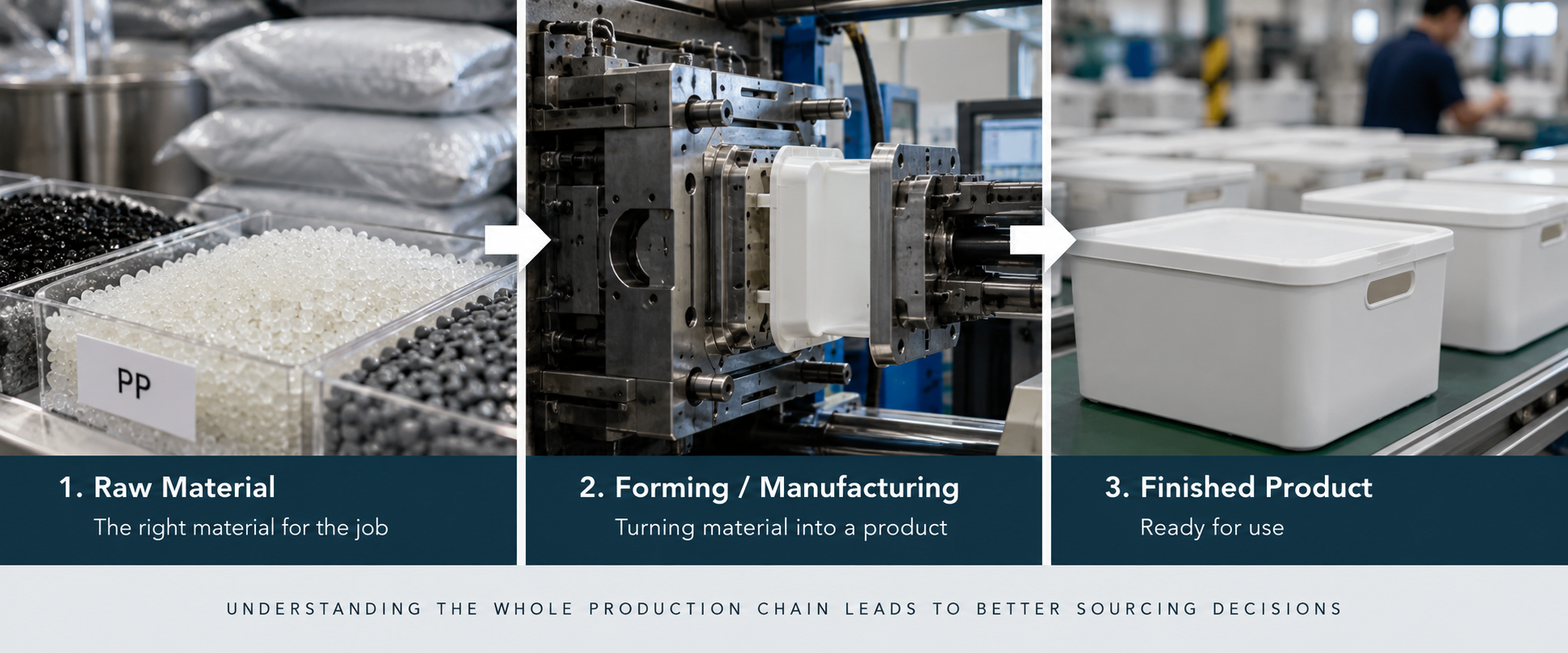
A better approach: evaluate the product engineering first, select the right manufacturing process, and then target factories whose machinery, certifications and workflow are built specifically for that process.
What Should You Send a Vietnamese Manufacturer?
The more technical your product, the more critical your initial documentation becomes. Before requesting quotes, prepare:
- 2D technical drawings (with clear dimensional tolerances) and 3D CAD files (.STEP, .IGES).
- Detailed material specifications and resin/alloy grades.
- Reference samples or high-resolution benchmark photos.
- Complete tech packs (for garments, bags, and sewn goods).
- Surface finish, pantone colour, and texture standards.
- Forecasted initial order quantity and annual volumes.
- Packaging, labelling, and master carton drop-test specifications.
- Destination market regulations (e.g., REACH, FDA, Prop 65, FSC).
You do not always need a finished engineering package before speaking to suppliers. If you are still in development, a hands-on local sourcing partner can bridge the gap and collaborate with manufacturers to refine the design for manufacturing (DFM).
How A-Up Can Help
Navigating Vietnam's manufacturing landscape requires on-the-ground technical know-how. At A-Up Sourcing, we help buyers determine the most practical manufacturing route based on volumes, materials, tolerances and target budgets.
We provide end-to-end support across the production lifecycle:
- Finding the Right Factory: Vetting verified manufacturers with the right machinery, capacity and compliance track record.
- Project Management & Development: Guiding technical sampling, tooling development, and production scheduling.
- Quality Control & Inspection: On-site audits, in-line inspections, and pre-shipment container loading checks.
Frequently Asked Questions
What are the main manufacturing processes used in Vietnam?
Vietnam uses a wide range of manufacturing processes including injection moulding, CNC machining, sheet-metal fabrication, casting, extrusion, woodworking, textile production, ceramics and natural-material production.
How do I know which manufacturing process is right for my product?
It depends on the material, design, quantity, tolerances, tooling budget, required finish and performance requirements. A technical review with an experienced manufacturer or sourcing specialist can help determine the most suitable process.
Does every Vietnamese factory manufacture its own products?
No. Some factories manufacture most components in-house while others outsource certain processes such as plating, powder coating, printing or specialised machining. This is common, but buyers should understand the supply chain and quality controls.
Is Vietnam suitable for industrial manufacturing?
Yes. Vietnam has established capabilities across plastics, metals, textiles, electronics, furniture, packaging, ceramics and many other industrial sectors. The right supplier depends heavily on the product and required production process.
Can A-Up help identify the right manufacturing process?
Yes. A-Up can assess the product requirements, identify suitable manufacturing routes and source Vietnamese manufacturers with the relevant equipment and experience.
Final Thought
Effective sourcing is never just about finding someone who says, "Yes, we can make it."
It is about understanding how the product must be built, finding a factory with the exact capabilities to produce it, and establishing quality controls to keep output consistent from batch to batch.
Vietnam offers immense manufacturing capabilities. The key is knowing where to look, and knowing what you are looking at when you arrive on the factory floor.
Sourcing from Vietnam?
Tell us what you are making, your volumes and the market you are selling into. We'll come back with the right next step. Start with a free introduction call.